- Published on
Outdoor Bench Cushions: Sizing, Ties and What Survives Rain
- Authors

- Name
- Outdoor Wooden Bench
Most cushion mistakes happen before anyone looks at fabric. The size is wrong, the thickness is wrong, or both.
A cushion that does not fit looks worse than a bare bench. It slides, it bunches at the corners, and it ends up in the garage.
Two tape measurements and one subtraction cover most of it. Everything else on this page is a distant second.
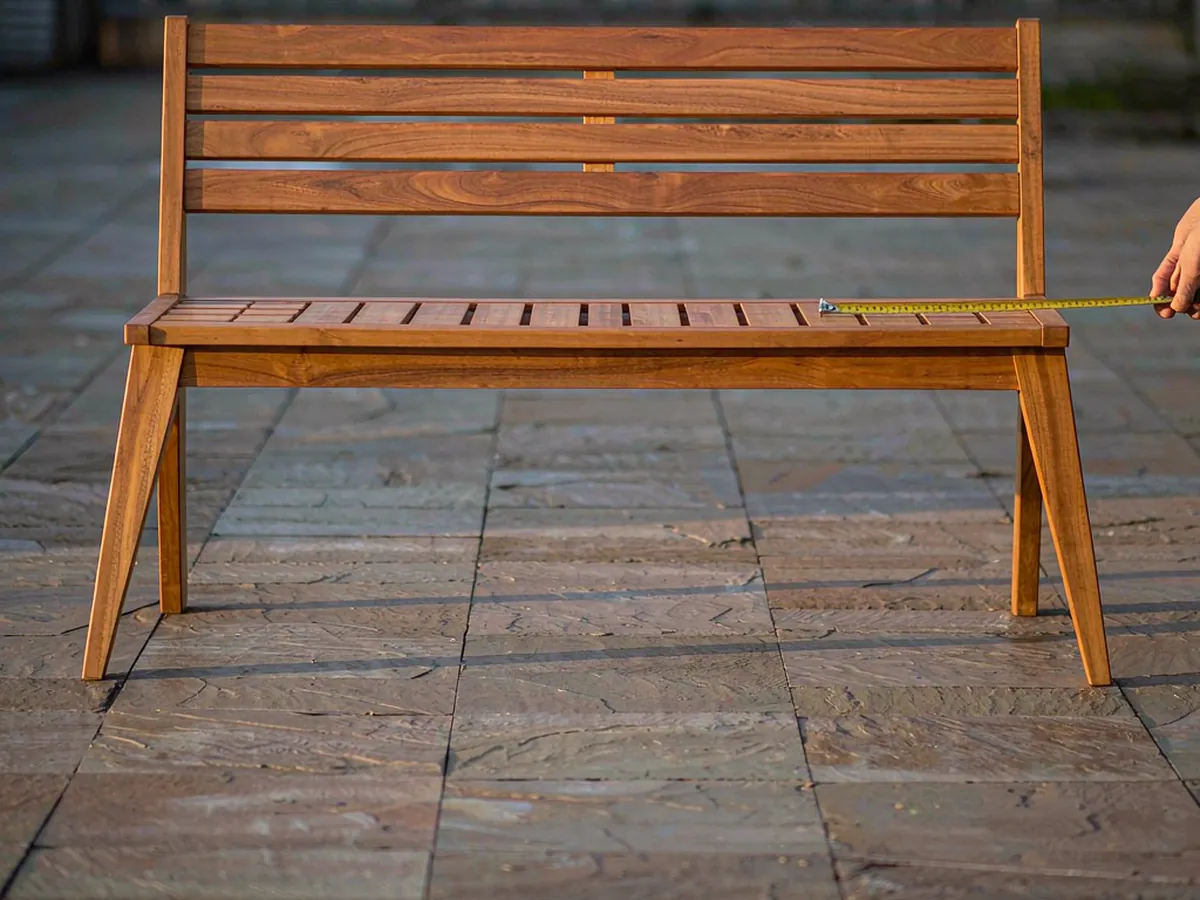
Measure the seat, not the bench
Listings quote the overall length. That number includes the arms, and sometimes a leg overhang.
Slide the tape along the flat part you sit on. That is your cushion length.
Then run it front to back for depth. On a bench with a back, stop where the back uprights begin.
Write both numbers down to the half inch. Foam cutters and sewing shops work to that tolerance.
A cushion never wants to run past the front edge. An inch of overhang looks sloppy and lifts when you sit down.
Take an inch off the length when the seat sits between two arms. A wedged cushion tears at the corner seam.
Now check the bench height. A 17-inch bench plus a 3-inch cushion lands at 20, which is bar stool territory.
Subtract the cushion from the height you want, not the other way around. The dimensions guide has the target numbers for six bench types.
Wide slat gaps need a solid base or a liner. Foam will find those gaps inside a month.
Thickness: 2, 3 or 4 inches
Two inches keeps a dining bench at table height. It also suits a backless bench, where you sit upright.
Three inches is the patio standard. It softens a slat seat without lifting your feet off the ground.
Four inches belongs on a low lounge bench. Picture a 14-inch frame, a deep seat, and a long afternoon.
Foam loses about a quarter of its thickness under an adult. A 3-inch cushion gives you roughly 2 and a quarter.
| Thickness | Under load | Best on |
|---|---|---|
| 2 inches | about 1.5 | Dining benches, backless benches, entryways |
| 3 inches | about 2.25 | Patio and garden benches 17 to 18 inches high |
| 4 inches | about 3 | Low lounge frames, deep seats, long sits |
Now the subtraction. Bench height plus cushion thickness minus compression should land between 18 and 19 inches.
A 17-inch frame with a 3-inch cushion lands near 19. That works.
The same frame with a 4-inch cushion lands near 20. Feet start dangling and knees ride high.
Older knees do better with a thick cushion on a slightly lower frame. Pushing up out of a low seat is what hurts.
One warning on the firm stuff. A 4-inch block of dense foam feels like a board, not a cushion.
One long cushion or two seats
One long cushion looks tidier. No gap in the middle, nothing sliding apart, one line of piping down the seat.
Two cushions cost less. Standard sizes sell cheap, and you can wash one while the other airs outside.
The middle gap collects crumbs and rainwater. Two cushions also drift apart on smooth slats.
Long cushions need a custom cut past 72 inches. Past that length, two seats usually win on price.
The common lengths are 36, 42, 48, 60 and 72 inches. Widths run 16, 17 and 18 inches.
| Bench length | One long cushion | Two seats |
|---|---|---|
| 36 inches | 36 x 16 | Two 18 x 16 |
| 48 inches | 48 x 16 | Two 24 x 16 |
| 60 inches | 60 x 17 | Two 30 x 17 |
| 72 inches | 72 x 18, usually custom | Three 24 x 18 |
A 53-inch bench is the awkward one. No standard length covers it, so expect a custom cut or a visible gap.
Two seats on a 48-inch bench also give you options. Slide them together for a nap, apart for two elbows.
What ties do, and what they cannot
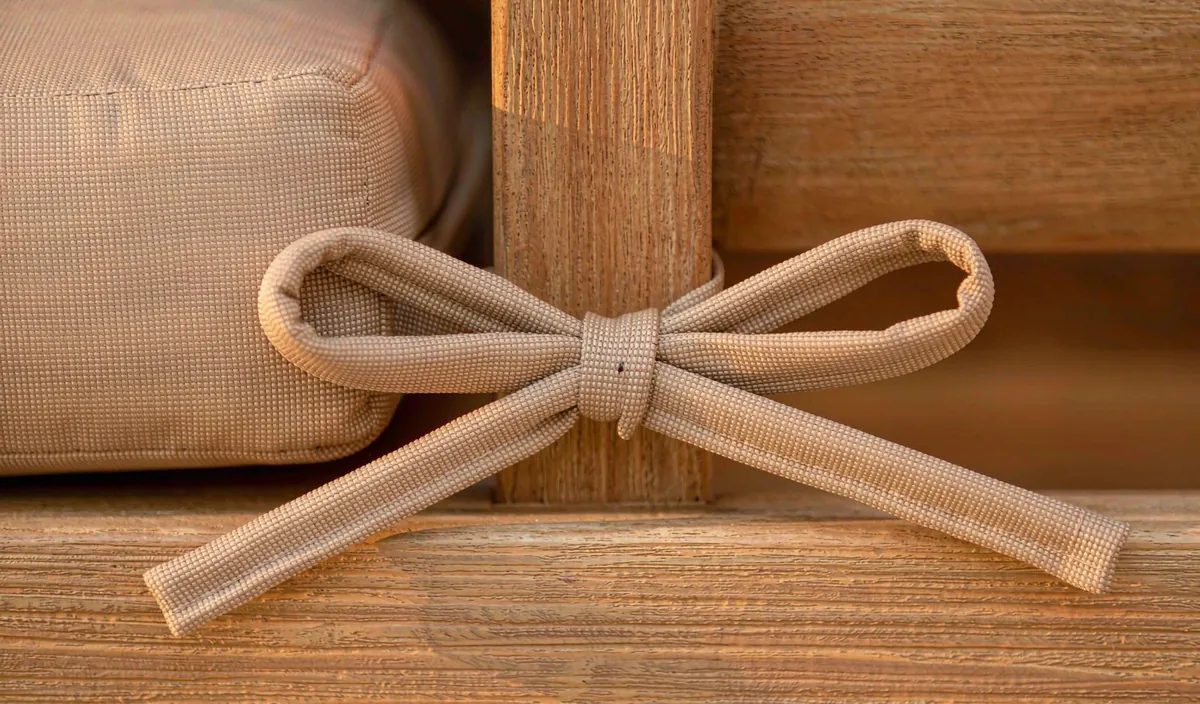
Ties stop two things: sliding and wind. A cushion without ties ends up on the lawn after the first good gust.
Rear ties loop around the back uprights. Front ties go round the front rail or the legs.
Tie a bow, not a double knot. You will undo them every time the cushion needs airing.
Look at what the tie attaches to. Flat webbing lasts years, and thin cord frays inside one summer.
A backless bench gives you nothing to tie to. Clips or a grip pad do that job instead.
Long rear ties reach around a thick rail. Short ones barely make the loop, then they slip.
Metal grommets rust and leave a stain. Plastic rings or sewn loops last longer outdoors.
Foam and filling, in plain terms
Foam comes in two families, and the difference decides how wet your cushion gets.
Open-cell foam holds air and water the same way. A sponge and a cushion share one structure.
Closed-cell foam holds neither. Water runs off the surface, and the cushion feels firm from day one.
Polyurethane foam is the usual furniture fill. Density runs from 1.5 to 2.5 pounds per cubic foot.
Below 1.8 pounds, foam softens and collapses within a season. Look for 1.8 or higher on any listing.
Polyester fiber fill belongs on a throw pillow. It clumps into lumps the first time it rains hard.
Memory foam makes a poor outdoor choice. It traps heat against you and it holds water.
The practical build is a closed-cell core with a soft top layer. The other option is medium-firm foam inside a waterproof liner.
That liner matters more than the cover does. It is the only thing standing between rain and the foam core.
Fabric that survives a summer
Solution-dyed acrylic is the one to look for. The color goes into the fiber itself, so sun cannot bleach it out.
Sunbrella is the best known brand of that fiber. Several mills make the same thing under other names.
Olefin resists water well and costs less. It fades sooner than acrylic under strong sun.
Polyester is the common cheap choice. It needs a coating to hold color, and the coating wears through.
Cotton canvas feels the best and lasts the worst. It mildews, and a mildew stain does not come out.
Read the tag for UV hours. Above 500 hours covers a full summer in most of the country.
Seams leak before fabric does. Ask whether the seams carry a seal, or expect water at the stitching.
Plastic or nylon zippers outlast metal ones outdoors. Metal teeth corrode and stain the fabric around them.
Water: drains, wicks or traps
Every cushion does one of three things with rain. It drains, it wicks, or it traps.
A mesh underside drains. Water passes through and the foam dries from both faces.
Cotton and open-cell foam wick. Water pulls inward and stays there for days.
A coated cover over open-cell foam traps. Rain enters at the seams and cannot get back out.
That last combination is the worst thing on the market. It reads as waterproof and behaves as a bucket.
Waterproof usually describes the cover, not the cushion. The seam is the hole in that claim.
Water-repellent is the honest label. It sheds most rain and still lets vapor escape.
Look for a vent, a mesh panel or a breathable backing. Any one of the three makes a real difference.
The wet cushion problem
A soaked 3-inch cushion holds more water than you expect. Lift it and the weight tells you.
It will not dry on the bench. Air cannot reach the underside, and the slats hold the damp in.
Stand it on edge in full sun and turn it twice a day. Two days is normal, three in humid weather.
Squeeze a corner once it feels dry. Foam that stays flat has lost its cell structure and will not come back.
A musty smell means mildew down inside the foam. Wash the cover, then sponge the foam with mild soap.
Rinse well and dry it fully before it goes back out. A damp cushion grows mold on the slats beneath it.
Protect the bench while the cushion dries. The care guide covers what trapped damp does to wood over a season.
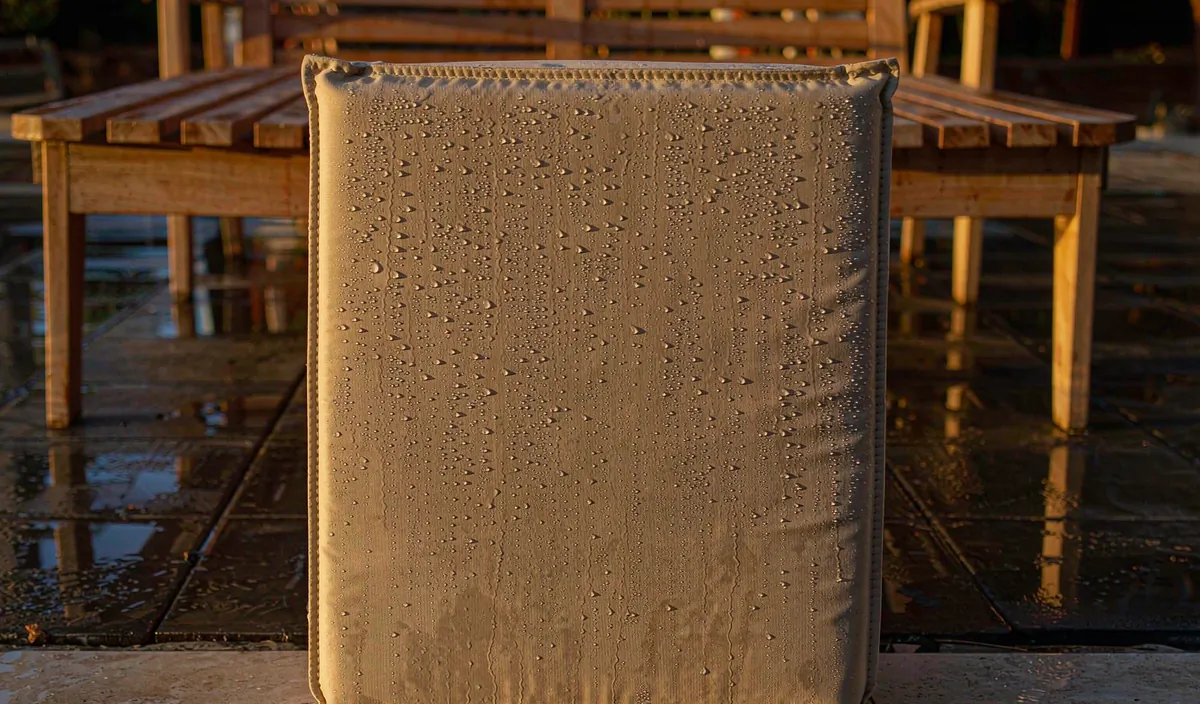
Keeping it where you put it
Wind moves cushions more often than people do. An open deck catches gusts that a porch blocks.
Ties are the first answer. Clips are the second, and they work where a tie has nothing to grab.
A non-slip rug pad under the foam stops most sliding. Cut it an inch smaller than the cushion.
Hook-and-loop strips grip a smooth seat well. They fail on rough sawn slats.
Weight helps. Dense foam stays put while a soft cushion walks across the seat.
Bring the cushion in when you will not sit for a few days. That one habit doubles its life.
Fit on a backless bench
A backless bench usually runs 16 inches deep. The cushion should match it, not exceed it.
Three inches on a 16-inch seat leaves little room for your thighs. Two inches keeps the proportions right.
There is no back to tie to. Route the rear ties under the seat and around a rail.
Some backless benches have no rails at all. Use clips or a grip pad and skip the ties.
Check the seat height again. A 17-inch frame with a 2-inch cushion lands at 18, which suits most adults.
The small bench guide covers the tighter versions of this. Depth drops to 14 inches there, and a 2-inch cushion starts to feel thick.
Fit on a backed bench
Measure between the arms, then take off an inch. That is your cushion length, not the listed bench size.
Arms can cost you 8 inches of sitting room. Two arms turn a 60-inch bench into a 52-inch seat.
Depth runs 18 to 20 inches on most backed benches. A 17-inch cushion leaves a small gap behind you, which is fine.
Push the cushion back against the frame. A gap behind your hips turns into a place where water sits.
Rear ties go around the uprights, above the seat line. Tied below the seat, they slide down within a week.
A cushion that drapes over the front edge will wear through there first. Keep it a half inch back.
If you have not bought the bench yet, the buying guide covers frames that take a cushion well.
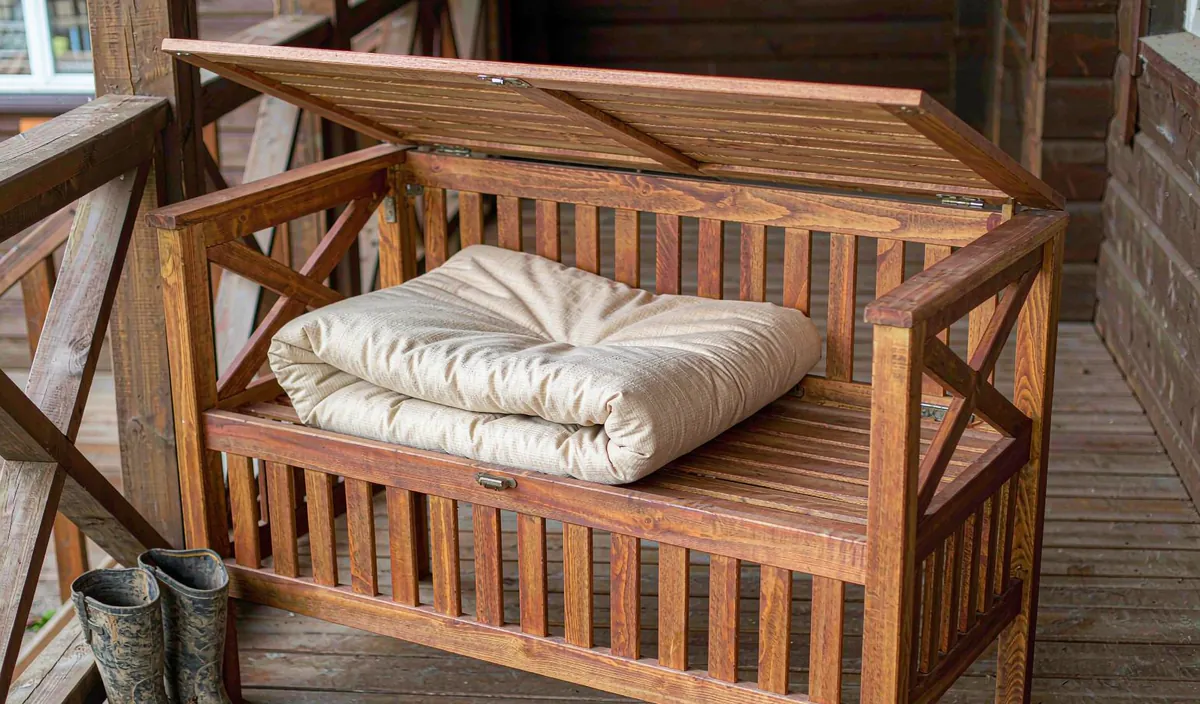
Fit on a storage bench
The lid decides everything here. If the top lifts, the cushion comes off every single time.
Measure the lid swing before you order. Some lids need the whole seat clear.
A bench with a gas strut holds its lid open. Those tolerate a cushion, as long as the cushion stays thin.
Two inches suits an entryway bench. You sit to pull boots on, not to read a chapter.
Indoor storage benches want a fabric that breathes. A coated cover traps damp against the wood underneath.
Check the hinge line for pinch points. A cushion that overlaps the hinge tears at the corner.
Washing and off-season storage
Unzip the cover and wash it cold on a gentle cycle. Hot water shrinks acrylic and dulls the color.
Never tumble dry an outdoor cover. Heat damages the water-repellent finish that sheds rain.
Hang it in shade rather than full sun. Strong sun on wet fabric sets wrinkles into the weave.
Foam never goes in a machine. Sponge it with mild soap, rinse it, and dry it flat.
Store cushions in a breathable bag or an old cotton sheet. Plastic traps moisture and invites mildew.
Keep them off a concrete floor through winter. Concrete pulls damp upward all season.
Swap the two cushions between seats each spring. Wear evens out and the pair lasts longer.
Making one, honestly costed
A custom cushion costs about what a good bought one does. The work sits in the measuring and the sewing.
Foam cut to size runs 30 to 60 dollars for a 2 by 18 by 48 inch slab. Density matters more than price here.
Outdoor fabric takes about two yards for one seat. Expect 30 to 60 dollars for solution-dyed acrylic.
Add a zipper, thread and a waterproof liner. That is another 15 to 25 dollars in parts.
Bought, a standard 48-inch cushion runs 40 to 90 dollars. Custom work only wins on odd sizes and matched pairs.
Most foam shops cut to your dimensions for a small fee. That removes the hardest part of the job.
Sewing takes two to three hours the first time. The second cushion takes half as long.
You will not save money on a plain 48-inch bench. Buy the standard size and spend the afternoon sitting instead.
Common questions
What size cushion fits a 48-inch bench?
48 by 16 inches on a backless bench. With arms, measure between them and take off an inch, which usually lands near 45.
How thick should a bench cushion be?
Two inches for a dining bench, three for a patio bench, four for a low lounge frame. Pick thickness from the height you want, not from the photo.
Will a 3-inch cushion make my bench too high?
On a 17-inch frame, yes. It lands near 19 once you sit, which is fine for a patio and high for a table.
Can I leave an outdoor cushion out in the rain?
Only if it drains. A coated cover over open-cell foam traps water at the seams and keeps it there.
How do I stop a cushion blowing away?
Tie it to a rail or clip it to the slats. A grip pad helps on a smooth seat, and weight helps everywhere.
Are Sunbrella cushions worth the extra money?
Yes on a bench that sits in full sun. The color holds for years, and faded fabric is what makes a patio look tired.
How long does an outdoor bench cushion last?
Three to five years with care and covered storage. Cheap foam collapses inside one season.
Can I wash the foam itself?
No. Sponge it with mild soap, rinse it, and dry it flat in the sun. A machine tears the cell structure apart.
What is the cheapest way to make a bench comfortable?
A 2-inch closed-cell pad cut to the seat. It costs less than a cushion and it never soaks up water.
Do I need a custom cushion for an odd bench length?
Above 72 inches, yes. A 53-inch bench also needs one, unless you accept a gap at one end.
Can I use an indoor chair cushion outside?
No. The fabric mildews and the fill clumps within a season, and neither recovers.
How do I keep mold from forming under a cushion?
Lift the cushion after rain and dry both faces of it. Wipe the slats before the cushion goes back.
The short version
Measure the seat between the arms, and front to back. Take an inch off the length for arm clearance.
Pick thickness from the height you want. Bench height plus cushion minus compression should land at 18 or 19 inches.
Choose a filling that drains and a fabric that holds color. Solution-dyed acrylic over closed-cell foam is the safe pair.
Tie it down or clip it, and bring it in when the weather turns.
That is the whole decision. Size first, then thickness, then filling, then the fixing. Color comes last, because color cannot fix a bad fit.