- Published on
Porch Bench: The Seat Against the House, and What That Changes
- Authors

- Name
- Outdoor Wooden Bench
What a porch changes
A porch is three things at once. A roof, a wall, and an open edge.
Each one treats a bench differently.
The roof keeps rain off the top. The wall traps damp behind the back. The open edge takes weather sideways.
Most porch benches fail at the wall. Not out in the weather. That is the part nobody plans for.
Start with the walkway, not the bench
A porch has to hold three things. A door, a bench, and a path past both.
Get that order wrong and the bench blocks the house.
Measure the depth first. Six feet is common. A door needs about 36 inches to swing clear.
Two feet of that goes to the bench. The rest is the walkway.
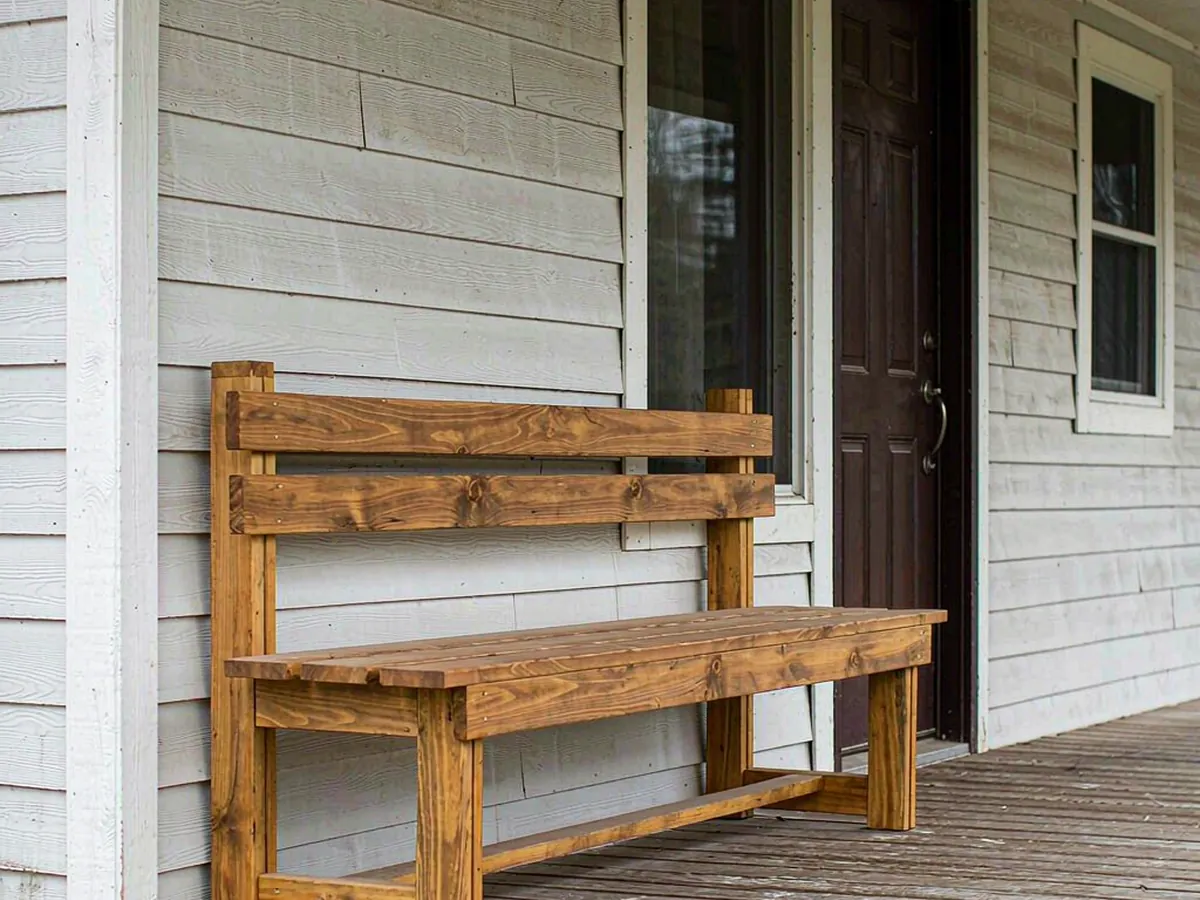
So the bench goes against the wall. People walk in front of it, not around it.
The numbers that fit
Bench depth decides whether the porch still works. Fifteen inches leaves more room than eighteen.
Both sizes seat two people.
| Porch depth | Bench depth | Room left in front |
|---|---|---|
| 4 feet | 15 inches | A tight pass, turned sideways |
| 5 feet | 15 inches | Two feet, enough to walk |
| 6 feet | 15 to 18 inches | Three feet, comfortable |
| 8 feet | 18 to 20 inches | Room for a chair beside it |
| 10 feet and up | Any depth | Room for a table too |
Tape the footprint on the floor before you buy. Cardboard and painter tape cost nothing. They settle the question in a minute.
Depth, height and the boot test
A porch bench does two jobs. It is a seat. It is also where boots come off.
The second job fixes the numbers.
Seventeen to eighteen inches high lets a foot reach the floor. No stretch, no wobble.
A seat deeper than 18 inches pushes people forward. They have to reach for their laces.
Sixteen inches suits a bench used for shoes. Eighteen suits a bench used for reading.
The porch floor slopes
A porch floor drains away from the house. The fall runs about a quarter inch per foot. You cannot see it, but a bench foot finds it.
On that slope a bench rocks on two feet. The back feet sit high, because the floor drops toward the open edge.
Shim the front feet only. A cedar shingle or a plastic leveling shim does the job. Glue it to the foot so it stays put.
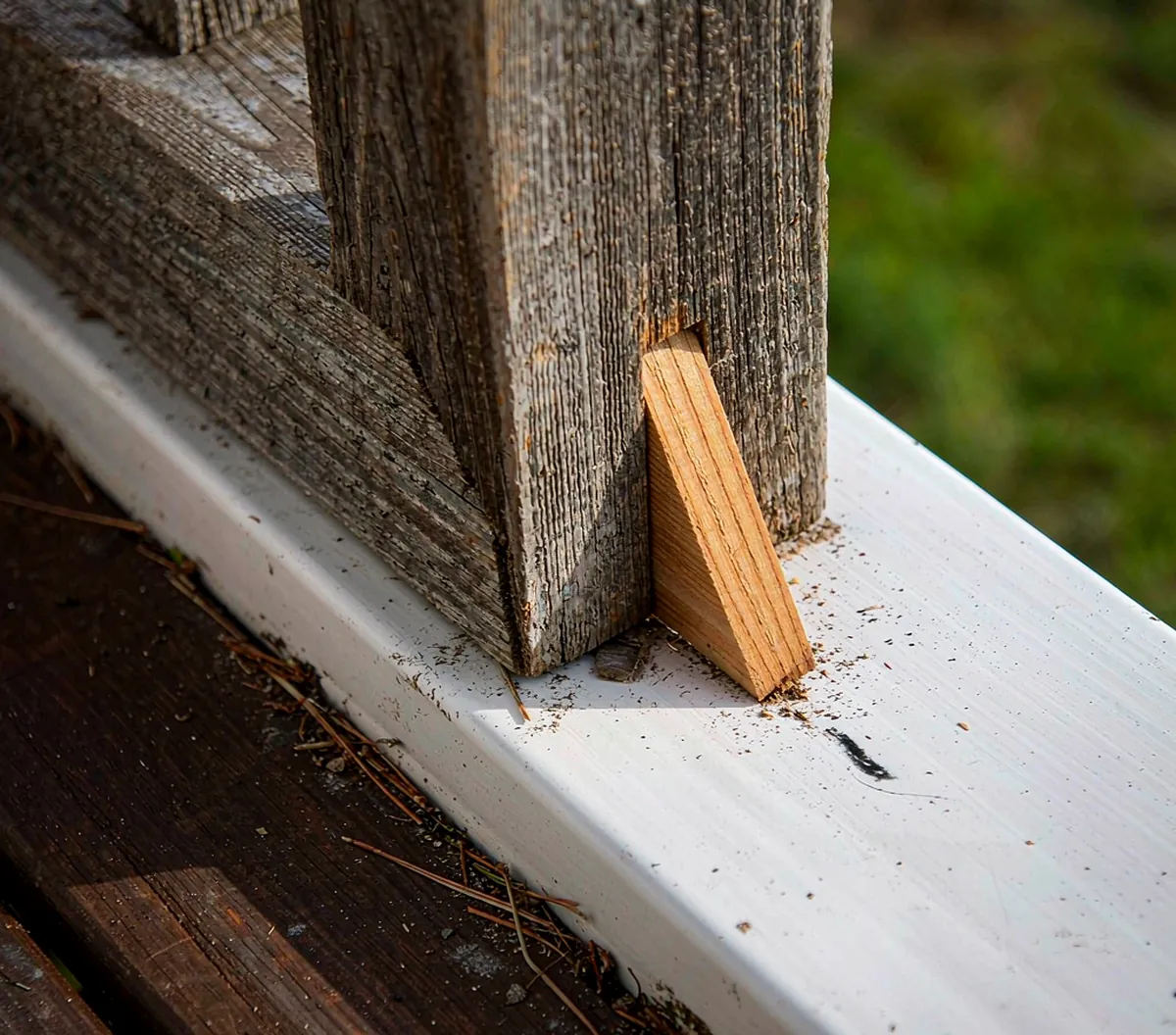
Do not level the bench with a block under the seat. The legs still rock. The block hides it until someone leans back.
Test it with a hand on the top rail. Push sideways. A bench that moves a quarter inch wants a shim.
The wall side stays wet
Siding sheds water. The ground under a porch stays shaded all day. A bench pushed flat to the wall sits in that damp.
Leave 2 inches between the back rail and the siding. Air moves through the gap. The finish dries after rain.
The gap also stops the bench rubbing a mark into the paint. That mark is hard to fix once it sets.
Sun on a covered porch
A roof stops rain. It does not stop light.
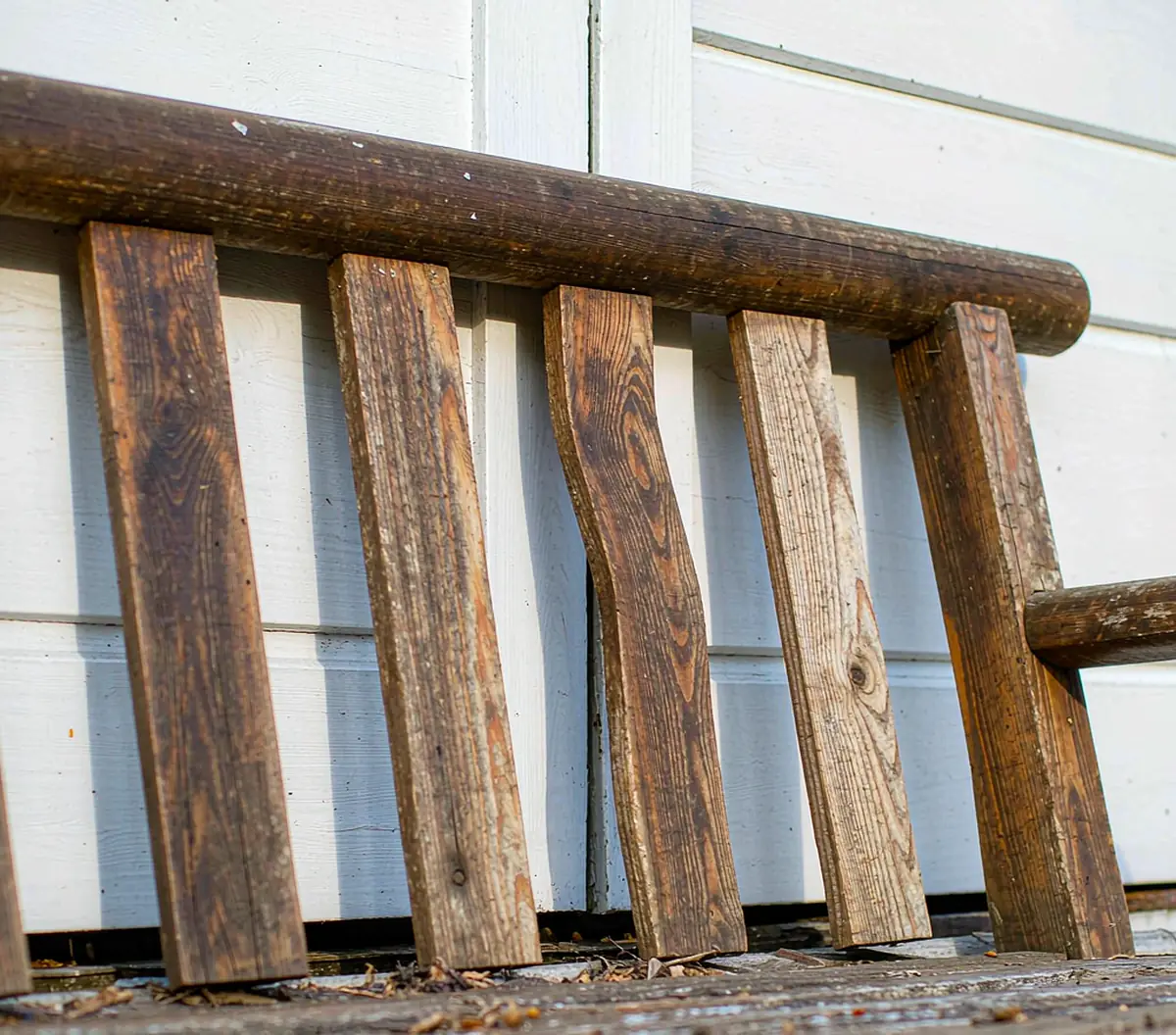
A west porch takes sun from mid afternoon until sunset. The light comes in low and crosses the seat.
The finish fails first on the top of the back. Then on the arms.
Those faces catch light at a shallow angle. They hold heat longer than the seat does.
Oil that bench once a year, or paint it. A light color keeps the seat cooler than a dark one.
Materials that suit a roof
Covered exposure is the kindest test wood gets. Every species lasts longer under a roof than in the open.
Teak and eucalyptus handle the damp wall side best. Cedar and pine do fine while the finish holds.
Painted pine suits a porch better than painted oak. Pine moves less under a roof. The paint film lasts longer.
The wood types guide compares five species on price and life.
Painted or oiled, on a porch
A covered porch is where paint earns its keep. No direct rain means the film lasts three to five years.
Oil suits a bench you want to touch. It takes twenty minutes. No sanding between coats.
The painting guide covers the prep that decides which one wins.
Skip the cushion, or tie it down
A cushion on a porch collects pollen. It also collects leaf litter and cat hair.
A bench by a door collects bags and wet coats on top of that.
If you want one, pick a cushion with ties. Take it in when rain is coming sideways.
The cushion guide covers the fabrics that survive a wet summer.
A bare bench wipes clean in ten seconds. On a porch, that beats comfort.
Wicker, resin and rattan
Wicker looks right on a porch. It also traps dust in a thousand corners. It sags after two summers.
Resin wicker holds up better outdoors. It still fades in sun.
A wooden bench with a slat seat drains and sweeps clean. Slats matter more than the frame here. A solid seat holds water in a puddle.
Dogs, boots and wet paws
A porch bench takes a wet dog better than a sofa does. It also takes the smell.
Keep a towel in a crate under the seat. Slats drain. A cushion holds the water and the smell together.
A leash hook at 18 inches suits a dog that waits. Higher than that, the leash lifts the front feet off the floor.
The rail, the back and the view
A porch rail stands 36 inches off the floor. A bench back stands about 34. So the back hides the rail, and the rail hides the yard.
On a porch the view usually runs sideways. A tall back cuts that line. A low back or an armless bench keeps it open.
Sit in the bench before you buy. Look left, then right. If the back blocks both, pick a lower one.
What goes under and above
A porch bench is furniture with a job. A tray underneath catches boots. Hooks above take a coat and a leash.
| Item | Clearance | Why |
|---|---|---|
| Boot tray | 4 inches under the seat rail | Trays run about 3 inches deep |
| Storage crate | 15 inches to the seat | Crates stand 12 to 14 inches |
| Coat hooks above | 60 inches off the floor | That is shoulder height for most adults |
| A broom | 12 inches under the seat | Anything lower and the floor stays gritty |
Anchoring a porch bench
Most porch benches stay put. The wall blocks wind. The roof blocks rain.
Two cases still want a bolt. A light bench at an open end. And a bench that children climb on.
The anchoring guide covers joists, decking and the hardware.
Snow and the open edge
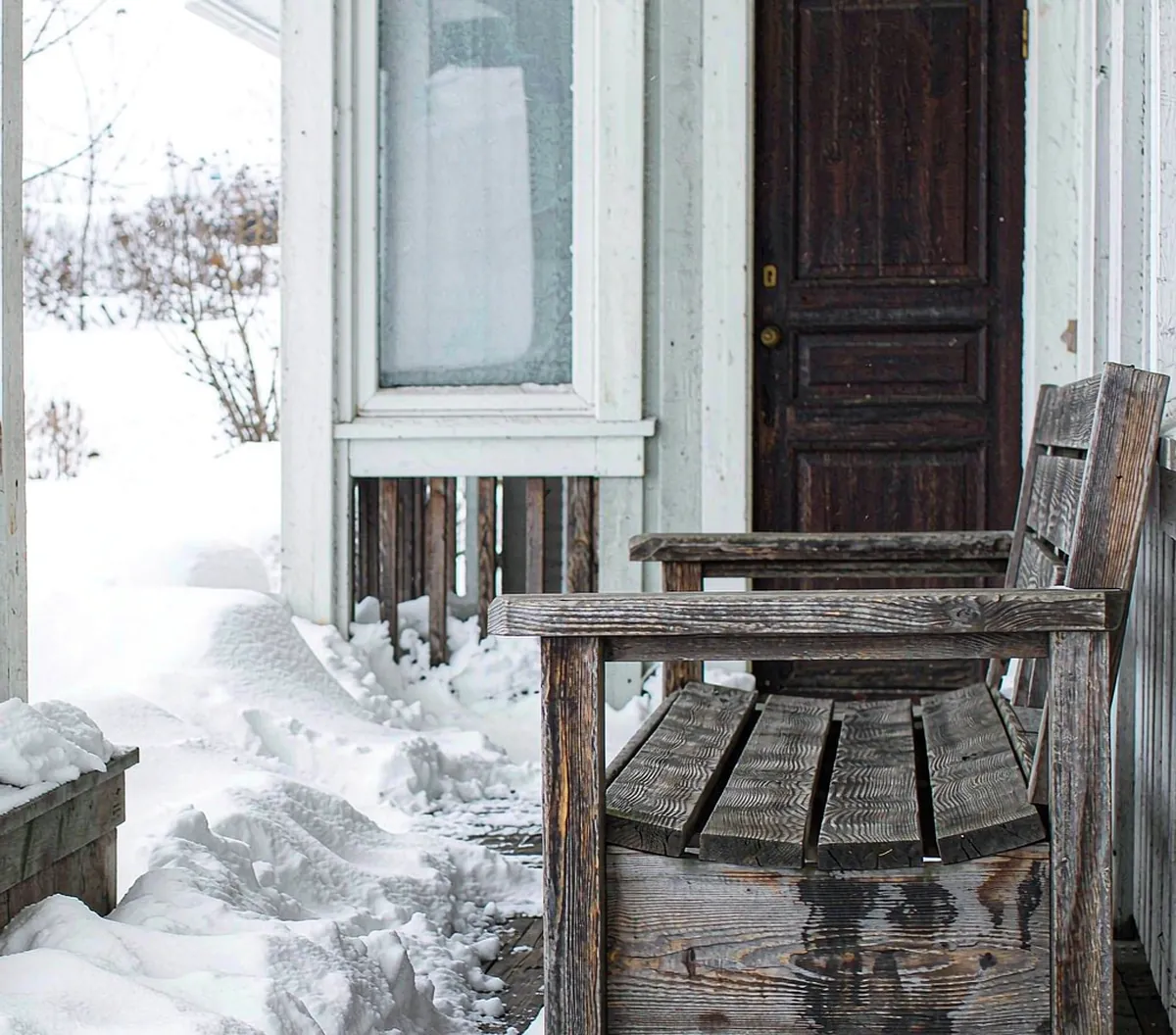
Driven snow lands in the first 3 feet of a porch. A bench parked there sits wet all winter. Then it freezes.
Move it toward the wall in late fall. Or stand it on end in a garage. A bench that stays out takes every thaw.
Ice under the feet is the other problem. Clear the slab before it sets. A bench in a puddle refreezes at the feet.
Sizing for the porch you have
A 4 foot porch takes a 4 foot bench. That leaves no walkway. It works at a back door nobody uses.
A 6 foot porch takes a 5 foot bench. That leaves three feet of walkway. Most people buy that size.
The small bench guide covers shorter seats for tight entries.
Two benches, one porch
A long porch takes two benches. Put each one under a window or beside a door. Space them 6 feet apart at least.
Two benches in a row read as a waiting room. One bench and one chair read as a porch.
Leave the middle open. A 20 foot porch with a bench at each end still feels like a room.
A bench under a window
A bench under a window looks right. It also blocks light. The sill sets the limit.
Keep the back below the sill. A 30 inch bench slides under a 32 inch sill with room to spare.
A bench that covers glass turns a bright porch into a tunnel. It also holds a wet back rail against the frame.
Between the bench and the door
Leave a foot between the bench end and the door frame. A bench hard against the trim catches the door.
It also catches the mail and every wet umbrella. That foot gives the door room to open with full arms.
It costs one seat of length. It saves a season of bruises.
A screened porch is a covered porch
A screen cuts wind. It cuts bugs. It does not cut damp.
Treat a screened porch like any other covered porch. Keep the 2 inch gap at the wall.
Screens do trap pollen. Wipe the seat more often than you would outside.
Care that changes under a roof
Wash once a year. Oil every other year. A covered bench skips the spring scrub that open benches need.
Check the wall side in fall. Mold starts there first. That face never sees sun, and the back rail hides it.
The care guide covers the wash and the oil in detail.
Common questions
How big a bench fits on a 6 foot porch?
A 5 foot bench leaves about 3 feet of walkway. Measure from the bench edge to the porch rail. Anything longer feels tight when two people pass.
Should a porch bench touch the house wall?
No. Leave 2 inches for air. A bench flat against the siding traps damp, and that face fails first.
What seat height is best for putting on boots?
Seventeen to eighteen inches. Keep the seat no deeper than 17 inches. Then a foot reaches the floor without sliding forward.
Does a covered porch need a different finish?
Paint lasts longer under a roof. A porch is the one place paint clearly wins. Oil still works if you refresh it yearly.
Will a wooden bench fade on a west porch?
Yes. The top of the back fades first. Use an oil with a pigment, or a light paint.
Is wicker a bad choice for a porch?
It is a fussy one. Wicker collects dust and sags after a couple of summers. A slat seat drains and sweeps, which suits a porch.
How much room do I need in front of the bench?
Two feet is the minimum for walking past. Three feet is comfortable. A 6 foot porch gives you that with a 15 inch bench.
Do I need to anchor a porch bench?
Usually not. The house blocks wind and the roof blocks rain. Anchor a light bench at an open end, or one that children climb.
Should I move the bench in winter?
Move it off the open edge. Push it toward the wall, or stand it in a garage. The first 3 feet of a porch take driven snow.
Can a porch bench go against a window?
Yes, if the back stays below the sill. A bench that covers glass blocks light. The porch starts to feel like a tunnel.
What about a bench on a screened porch?
Treat it like a covered porch. Same 2 inch gap at the wall. Expect more pollen and wipe the seat more often.
How often does a porch bench need oil?
Every other year in most climates, yearly on a west or south porch. Put a drop of water on the seat. If it soaks in fast, the wood is thirsty.
The short version
Measure the porch before the bench. Six feet takes a 5 foot bench and a walkway.
Keep 2 inches off the wall. Check the wall side every fall.
Pick 15 inches deep for a walkway. Pick 16 for boots. Paint it if the porch faces west.